
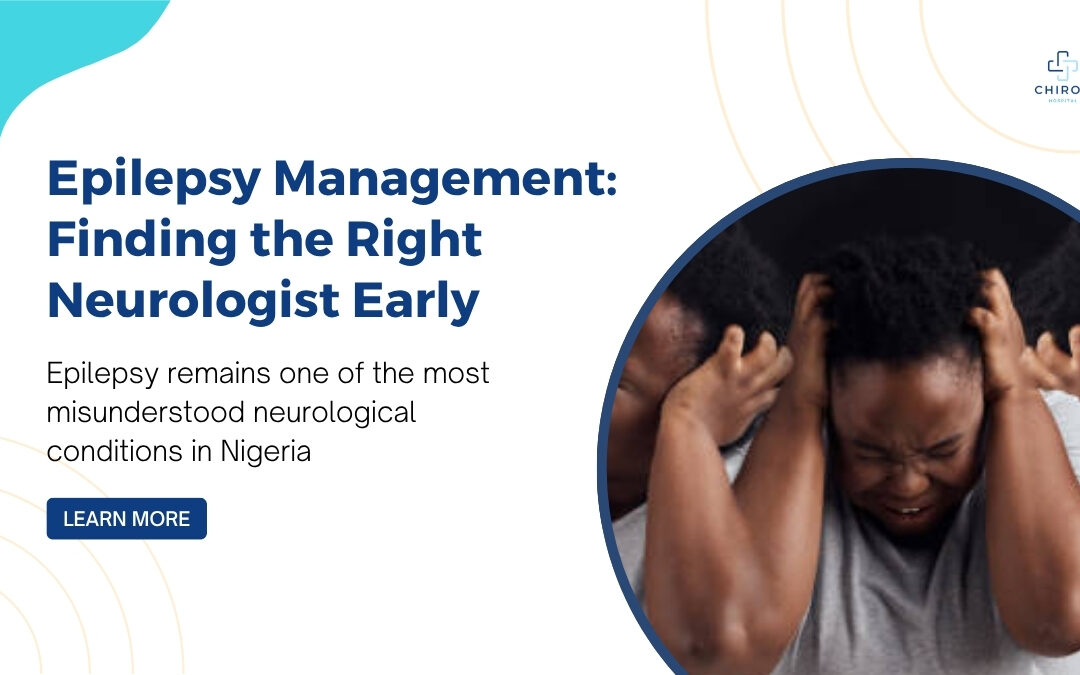
For many people living with epilepsy, the hardest part is not always the seizures themselves. Sometimes, it is the fear, confusion, and misunderstanding that come with the condition.
In many homes, seizures are still surrounded by myths and stigma. Some people believe epilepsy is spiritual. Others assume it cannot be treated. Because of this, many patients delay seeking medical help until the condition begins affecting school, work, relationships, or daily life.
At Chiron Hospital, we often see patients who have spent years struggling silently before finally speaking to a neurologist. The good news is that with proper diagnosis and treatment, many people with epilepsy can live healthy, productive lives.
Understanding Epilepsy
Epilepsy is a neurological condition that causes repeated seizures. These seizures happen when there is abnormal electrical activity in the brain. Not all seizures look the same, some people experience full-body convulsions, while others may briefly stare into space, lose awareness for a few seconds, or experience unusual sensations they cannot explain. Because symptoms vary, epilepsy is sometimes mistaken for stress, fainting, spiritual attacks, or even exhaustion.
When Should You See a Neurologist?
One seizure does not always mean epilepsy, but repeated episodes should never be ignored.
You should see a neurologist if you notice:
• Frequent seizures or convulsions
• Sudden blackouts or loss of awareness
• Episodes of confusion or memory gaps
• Jerking movements during sleep
• Seizures after a head injury
• Strange recurring sensations before losing awareness
Getting evaluated early can make a significant difference, especially because some seizures may be linked to underlying medical conditions that need treatment.
What Causes Epilepsy?
Epilepsy can affect both children and adults. In some cases, the exact cause is unknown. However, possible causes include:
• Head injuries
• Stroke
• Brain infections
• Birth complications
• High fever complications during childhood
• Genetic conditions
• Brain tumors
A neurologist helps identify possible triggers and develops a treatment plan based on the patient’s condition and seizure pattern.
Living With Epilepsy
Many people living with epilepsy worry about whether they can still work, attend school, drive, marry, or live independently. These fears are understandable, especially because of the stigma attached to seizures.
But epilepsy does not define a person’s future. With proper medication, follow-up care, and lifestyle adjustments, many patients successfully manage their seizures and continue living normal lives. Simple habits such as getting enough sleep, avoiding missed medications, reducing stress, and limiting alcohol intake can also help reduce seizure episodes for some patients.
The Importance of Proper Medical Care
One of the biggest mistakes people make is relying entirely on self-medication or unverified treatments without proper neurological evaluation. At Chiron Hospital, ourneurology clinic in lagos provides comprehensive assessment, diagnosis, and long-term epilepsy management tailored to each patient’s needs. Beyond treatment, we also focus on patient education and support because managing epilepsy involves both medical care and understanding.
No one should have to live in fear or silence because of seizures. Early medical attention can improve seizure control, confidence, safety, and overall quality of life.
📞 +234 909 000 1078
🌐 www.chironhospital.org
Recent Comments