
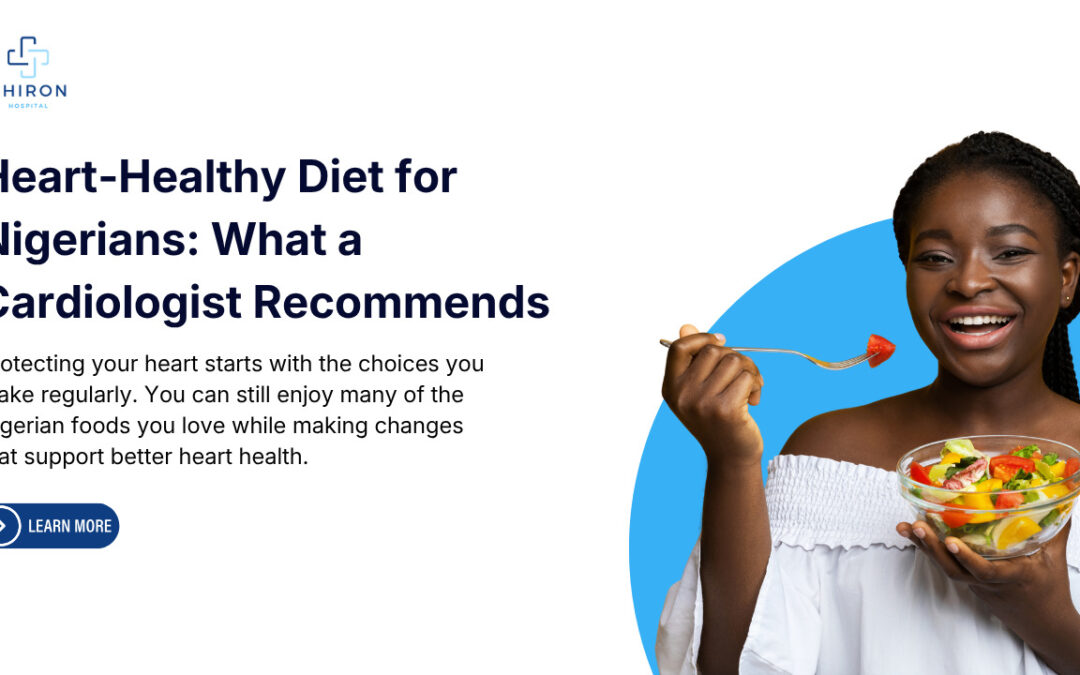
Food is an important part of everyday life in Nigeria. From rice and beans to soups, stews, yam, plantain, and a variety of local dishes, what we eat regularly can affect our heart health over time. While heart disease may not develop overnight, everyday choices around food, activity, and lifestyle can influence our risk.
At Chiron Hospital, cardiologists encourage patients to make practical changes to their everyday diet. You do not have to stop eating Nigerian food to protect your heart. Instead, it is about making healthier choices and finding a better balance.
Why Diet Matters for Your Heart
Your heart depends on healthy blood vessels and good circulation to work properly. However, a diet that is regularly high in salt, unhealthy fats, added sugars, and processed foods can increase the risk of health problems such as:
- High blood pressure
- High cholesterol
- Excess weight
- Heart disease
On the other hand, a balanced diet can support healthy blood pressure, cholesterol levels, and overall cardiovascular health.
Everyday Eating Habits That Can Affect Heart Health
Some common eating habits may increase cardiovascular risk when they become part of your daily routine. For example:
- Adding too much salt to soups, stews, and other meals
- Eating fried foods frequently
- Eating large portions of fatty or processed meats
- Drinking sugary beverages regularly
- Eating fewer vegetables and fruits
- Relying heavily on processed and packaged foods
However, you do not have to change everything at once. Small adjustments made consistently can support better heart health.
Nigerian Foods That Can Support a Healthy Heart
A heart-healthy diet can include many familiar Nigerian foods. The focus should be on variety, portion control, and healthier preparation methods. Consider including more:
- Vegetables: Ugu, spinach, okra, ewedu, garden eggs, and other leafy greens
- Fruits: Oranges, pawpaw, watermelon, bananas, apples, and other fresh fruits
- Whole and high-fibre foods: Oats, brown rice, beans, whole grains, and unprocessed cereals
- Lean proteins: Fish, skinless chicken, beans, and other healthier protein sources
- Nuts and seeds: Groundnuts and other unsalted nuts and seeds in moderate portions
- Healthy cooking oils: Use cooking oils in moderation rather than relying heavily on large amounts of added fat
Traditional meals can still have a place in a heart-healthy diet. For instance, you can pair a reasonable portion of rice, yam, or another staple with more vegetables and a lean source of protein.
Foods to Reduce
Some foods are best enjoyed less often, especially when they are high in salt, saturated fat, added sugar, or calories.
Try to reduce your intake of:
- Deep-fried foods
- Processed meats
- Fatty cuts of meat
- Highly salted foods
- Sugary drinks
- Sweetened snacks and pastries
- Meals prepared with excessive amounts of oil
This does not mean you have to completely remove your favourite foods from your diet. Instead, consider eating them less often, reducing portion sizes, or choosing healthier ways to prepare them.
Simple Ways to Eat Better Every Day
Making your diet more heart-friendly can start with small changes at home, at work, or when eating out.
You can:
- Use less salt when preparing meals
- Reduce the amount of oil used for cooking
- Choose grilled, boiled, baked, or steamed foods more often
- Add vegetables to your meals
- Choose whole fruits instead of sugary drinks
- Watch your portion sizes
- Drink more water throughout the day
- Include beans, fish, and other healthier protein choices regularly
Over time, these simple habits can become part of your normal routine.
When Should You Speak to a Cardiologist?
Your nutritional needs may depend on your age, medical history, weight, blood pressure, cholesterol levels, and other risk factors. Therefore, general dietary advice may not be suitable for everyone.
A cardiologist can assess your cardiovascular risk and recommend lifestyle changes that are appropriate for you. If you already have high blood pressure, high cholesterol, diabetes, or heart disease, professional guidance can be especially helpful.
At Chiron Hospital, our healthcare team combines medical assessment with practical lifestyle guidance to help patients take better care of their cardiovascular health.
Start with What Is on Your Plate
Protecting your heart starts with the choices you make regularly. You can still enjoy many of the Nigerian foods you love while making changes that support better heart health.
Choose more balanced meals, watch your portions, reduce excess salt and oil, and make healthier choices more often. If you would like personalised guidance on your heart health, speak with a cardiologist at Chiron Hospital.
Call: +234 909 000 1078
Website: www.chironhospital.org
Small changes to your everyday diet can support a healthier heart for years to come.